Journey overview
This route follows the line of the Tokaido Shinkansen, so every transfer is short and comfortable. It spends 13 nights in five places, yet you rarely travel with full luggage: suitcases can be forwarded from Tokyo to Kyoto and on to Osaka while you travel light to Hakone and Hiroshima. It is designed to arrive into Tokyo and depart from Osaka's Kansai International Airport, avoiding backtracking.
Day-by-day outline
Day 1: Arrive in Tokyo
Meet-and-greet on arrival and a private transfer to your hotel. Most flights from the US arrive in the afternoon or evening, so the first day is deliberately light: a short walk in the neighborhood and an early night.
Day 2: Classic Tokyo
A guided introduction to the city: Meiji Jingu shrine and the calm of its forest, Omotesando's architecture, and the energy of Shibuya. In the evening, a food walk through small izakaya and yakitori counters.
Day 3: Old and new Tokyo
Morning in Asakusa and Senso-ji before the crowds, then a river or canal journey toward the bay. The afternoon is free for galleries, the gardens of Hama-rikyu or shopping in Ginza.
Day 4: Your Tokyo
A flexible day: a day trip to Nikko or Kamakura, a sushi-making class, the digital art of teamLab, or simply time to explore at your own pace.
Day 5: Hakone
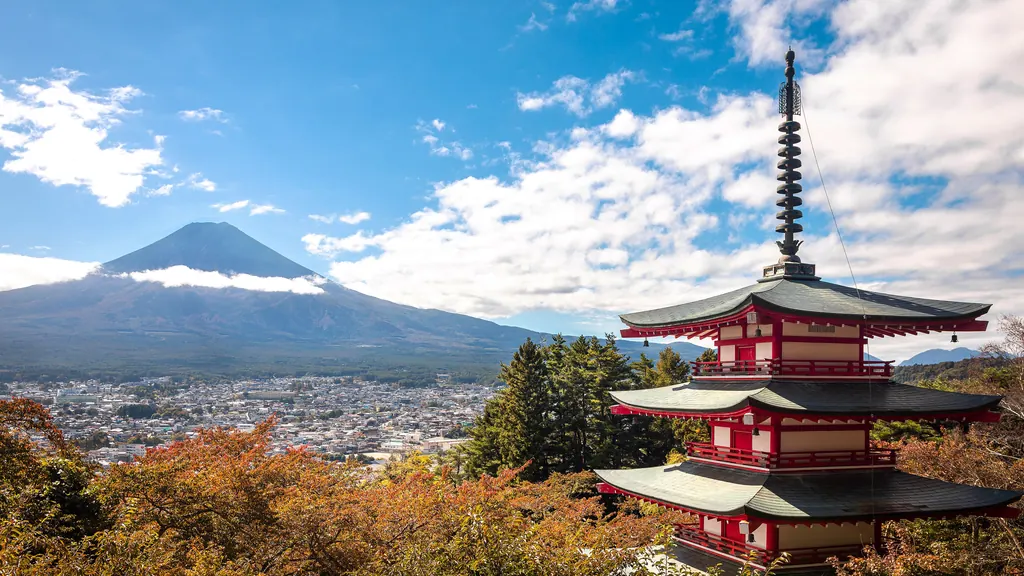
Send main luggage ahead to Kyoto and travel by train to Hakone. Explore the Hakone Open-Air Museum, cross Lake Ashi and, if the weather is clear, look out for Mount Fuji. Overnight at a ryokan with hot-spring baths and a kaiseki dinner.
Day 6: To Kyoto
After a slow ryokan breakfast, continue by Shinkansen to Kyoto. Settle in, then take an evening walk through Gion and along the Shirakawa canal.
Day 7: Eastern Kyoto
An early start at Kiyomizu-dera, then the preserved lanes of Sannenzaka and Ninenzaka, and on to quieter temples in Higashiyama. Afternoon tea ceremony with a host.
Day 8: Arashiyama and the west
Arrive early at the Arashiyama bamboo grove, then visit Tenryu-ji's garden and the riverside. Later, the golden pavilion of Kinkaku-ji or the rock garden at Ryoan-ji.
Day 9: Fushimi Inari and Nara
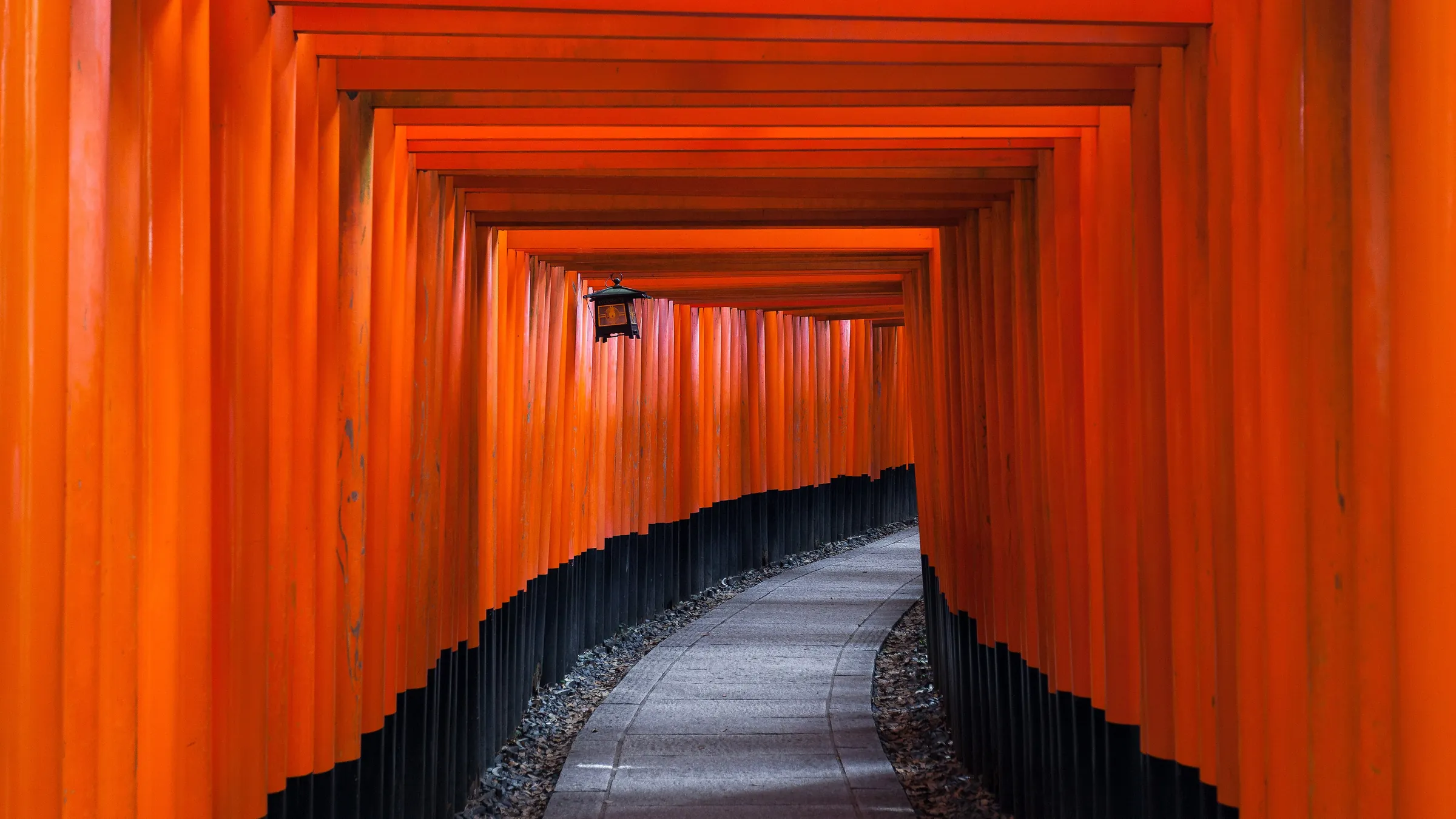
Walk the torii-lined paths of Fushimi Inari in the early morning, then continue to Nara for Todai-ji's great hall, Kasuga Taisha and the deer of Nara Park.
Day 10: Hiroshima and Miyajima
Travel light by Shinkansen to Hiroshima for the Peace Memorial Park and Museum with a guide, then cross by ferry to Miyajima. Stay on the island to see Itsukushima Shrine quiet in the evening and early morning.
Day 11: To Osaka
A morning walk on Miyajima before returning by ferry and Shinkansen to Osaka, where your luggage is waiting.
Day 12: Osaka
Osaka Castle and its grounds, the Kuromon Market, and an evening food tour through the neon of Dotonbori.
Day 13: At leisure
A final free day: a day trip to Kobe or Himeji Castle, shopping in Umeda, or a spa afternoon.
Day 14: Depart
Private transfer to Kansai International Airport for your flight home.
Highlights
- A traditional ryokan stay with hot-spring baths in Hakone
- Early-morning visits to Kyoto's most famous temples and shrines
- A guided visit to Hiroshima's Peace Memorial Park
- An evening on Miyajima after the day visitors leave
- Food walks in Tokyo and Osaka
- Short, comfortable Shinkansen transfers throughout
Who this journey suits
This itinerary suits first-time visitors who want the essential Japan without feeling rushed, couples, food lovers and families with children old enough to enjoy temples and trains. It combines guided days with free time. Travelers who prefer a slower pace can drop Hiroshima and add a night in Kyoto; those with more energy can add Kanazawa or the Japanese Alps.
Practical considerations
- Season. Late March to early April (cherry blossom) and mid-November to early December (autumn color) are the most beautiful and the busiest. Hotels in Kyoto book out well ahead, so we recommend planning at least six to nine months in advance for these periods.
- Rail tickets. We compare individual Shinkansen tickets with rail passes for your exact route; individual tickets are often the better value.
- Luggage. Forwarding suitcases between hotels makes this route much easier and is inexpensive.
- Walking. Kyoto involves a lot of walking and some steps. Guides and drivers can be arranged for travelers with limited mobility.
- Flights. Arriving in Tokyo and departing from Osaka (an open-jaw ticket) avoids returning to Tokyo at the end.
Train timetables, entry requirements, opening days and seasonal timing vary. All timings and bookings are confirmed when we plan your journey.
Ways to customize it
- Replace Hiroshima with two nights in the Japanese Alps (Takayama and Shirakawa-go).
- Add Kanazawa between Tokyo and Kyoto for gardens, crafts and seafood.
- Extend to South Korea with our 18-day Japan and South Korea journey.
- Read how much time you need in Japan and Tokyo vs Kyoto to fine-tune the balance.